creating transformative experiences for learning disabled young people creating transformative experiences for learning disabled young people
One of the phrases we talk about a lot at Bamboozle is removing the fear of failure.
It’s a simple idea, but it’s also one that is often misunderstood.
People sometimes hear it and assume we’re talking about lowering expectations. Others assume it means making everything easier or avoiding challenge altogether.
In reality, it’s quite the opposite.
Removing the fear of failure isn’t about reducing ambition. It’s about creating environments where children and young people feel safe enough to participate, explore and try.
Because when fear is present, engagement becomes difficult.
And when engagement becomes difficult, learning becomes difficult too.
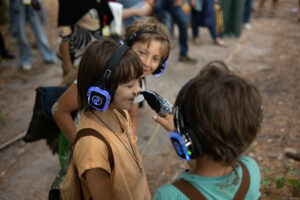 Many SEND learners experience situations every day that ask a great deal of them.
A new activity.
An unfamiliar environment.
An instruction that feels unclear.
An expectation they don’t fully understand.
A communication demand they aren’t yet ready for.
For some learners, these situations can create uncertainty and anxiety. Over time, repeated experiences of feeling unsuccessful can lead to avoidance.
That avoidance might look like refusal.
It might look like withdrawal.
It might look like distraction.
It might look like behaviour that adults find challenging.
Yet underneath those responses there is often a very understandable question:
“What if I get this wrong?”
At Bamboozle, we’ve learned that when we focus solely on changing the behaviour, we can miss the reason behind it.
A common response to disengagement is to increase support, provide more direction or give additional prompts.
Sometimes that helps.
Sometimes it adds pressure.
One of the key principles of the Bamboozle Approach is moving away from trying to make children fit the activity and instead adapting the activity around the child.
That shift changes our role.
Instead of asking:
“How do I get this learner to participate?”
we might ask:
“What would help this learner feel safe enough to participate?”
The difference is subtle, but important.
One question focuses on compliance.
The other focuses on conditions.
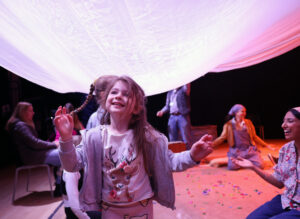 Imagine entering a room where there is no right answer.
No expectation to perform.
No pressure to produce a specific outcome.
Instead, there is an invitation.
An opportunity to explore.
A chance to contribute in your own way.
For many SEND learners, this can be a completely different experience.
Participation becomes something they choose rather than something that is demanded.
And choice matters.
When children feel ownership over their involvement, engagement often becomes more meaningful and more sustainable.
This principle was at the heart of our partnership with Lakeside School.
One of the aims of the project was to help staff move beyond highly directive approaches and create more child-centred learning experiences. As the project developed, staff reported becoming more skilled at observing learners and adapting environments to meet individual needs.
A teacher involved in the project reflected:
“I have had the chance to observe and analyse some hard-to-reach students which has supported me to make changes in the classroom and teaching that reduce anxiety and give greater chances for child-initiated learning.”
What stands out in this quote isn’t a new intervention or resource.
It’s the reduction of anxiety.
When pressure reduced, opportunities for participation increased.
By the end of the project, staff reported:
These weren’t achieved by asking learners to try harder.
They were achieved by changing the learning environment.
Removing fear doesn’t require a whole-school transformation overnight.
Often it starts with small changes:
These changes may seem minor, but together they communicate an important message:
“You are safe here.”
And when learners feel safe, engagement has room to grow.
If you’re interested in creating learning environments where children and young people feel confident enough to participate, our new digital course, Discover 9 Practical Strategies for Engaging SEND Children and Young People, has been designed for you.
Drawing on more than thirty years of Bamboozle’s work alongside SEND children, young people and the professionals who support them, this interactive online course shares practical approaches that can be applied immediately in schools, colleges, care settings and at home.
You’ll explore how to:
The course is fully self-paced, allowing you to learn around your existing commitments. Through interactive content, practical examples and real-world stories from schools that have implemented the Bamboozle Approach, you’ll gain strategies that can make an immediate difference to the children and young people you support.
Because when children stop worrying about failure, something remarkable happens.
They become free to participate, explore and discover what they are capable of.
Unit 10 St Mary's Works | 115 Burnmoor Street | Leicester LE2 7JL | 0116 255 2065
Registered Charity Number: 1136157 | Registered in England and Wales.
Company No. 7193792